
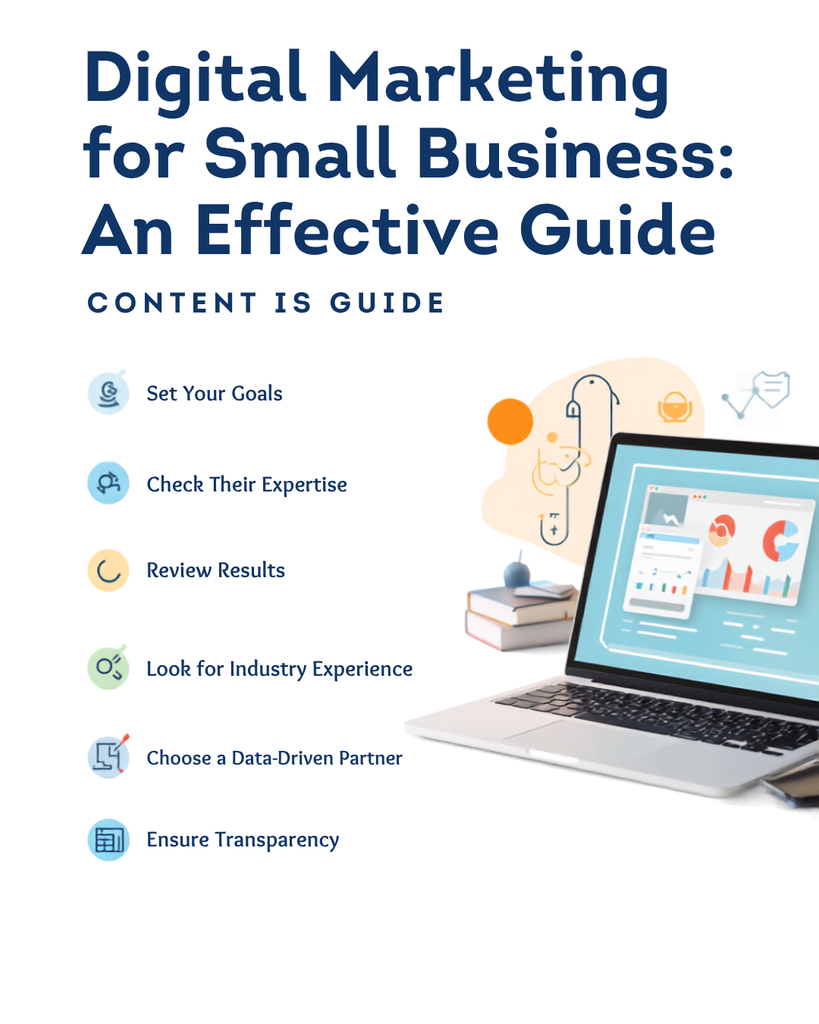
Digital marketing has become an important part of growing a small business. You do not need a huge budget or a large team to build a strong online presence. In fact, smaller businesses can often create closer relationships with their customers because they understand their local communities and audiences.
Today, customers use search engines, social media, websites, and email to discover products and services. Therefore, having a clear online strategy can help a business reach the right people, build trust, and generate new opportunities.
For small businesses, the key is not to use every available platform. Instead, focus on the channels that match your audience, goals, and available resources. With consistent content, search engine optimisation, social media, email campaigns, and performance tracking, you can gradually strengthen your online presence.
What Is Digital Marketing for Small Businesses?
Digital marketing refers to promoting products, services, or a brand through online channels. These channels can include search engines, websites, social media, email, online advertising, and content platforms.
For a small business, these methods provide opportunities to reach a wider audience without depending entirely on traditional advertising. A local bakery, for example, could use Instagram and Facebook to display its products, promote special offers, and communicate with customers.
Similarly, a consulting company could use LinkedIn and its website to share useful information and demonstrate its expertise.
The main objective is to connect with potential customers at the right time and through the right channel. As you learn more about your audience, you can create messages that are more relevant to their interests, needs, and location.
An effective strategy usually combines several activities, including:
- Search engine optimisation (SEO)
- Content creation
- Social media marketing
- Email marketing
- Search engine marketing (SEM)
- Website optimisation
- Performance measurement
Rather than trying everything at once, start with a few activities that support your business goals.
Why Online Marketing Matters for Small Businesses
Small businesses often compete with companies that have larger budgets and bigger teams. However, online channels can provide a practical way to reach specific audiences.
One major advantage is the ability to communicate directly with customers. Social platforms, email, and websites allow businesses to share updates, answer questions, collect feedback, and build long-term relationships.
In addition, online marketing can be measured more easily than many traditional methods. Businesses can monitor website visitors, engagement, leads, conversions, and other useful indicators.
This information can then be used to improve future campaigns.
Another benefit is flexibility. A small company can test different types of content, messages, and platforms without committing its entire budget to one approach.
How Small Businesses Can Use SEO
Search engine optimisation helps improve the visibility of a website in search engine results. For a small business, SEO can be especially useful because it can attract people who are already searching for related products or services.
A good starting point is keyword research. Identify the words and phrases your potential customers are likely to search for. Then use relevant terms naturally in your website pages, headings, titles, descriptions, and content.
However, avoid filling pages with the same keyword repeatedly. Search-friendly content should primarily be useful and easy for visitors to read.
Focus on Local SEO
Local SEO can be particularly valuable for businesses that serve a specific city, neighbourhood, or region.
Make sure your business information is accurate and consistent across relevant online listings. Important details can include:
- Business name
- Address
- Phone number
- Opening hours
- Website
- Products or services
Customer reviews can also help establish credibility. Encourage genuine customers to share their experiences and respond to feedback professionally.
Build Useful Backlinks
Backlinks are links from other websites to your website. Relevant links from trustworthy sources can support the authority of your site.
One way to attract backlinks is by creating useful resources that other websites want to reference. You can also explore relevant business directories, industry publications, partnerships, and guest contributions.
Quality matters more than simply collecting a large number of links. Focus on relevance and credibility.
Create Valuable Content
Content marketing gives small businesses a way to demonstrate knowledge, answer customer questions, and communicate their brand personality.
Your content could include:
- Blog articles
- Short videos
- Social media posts
- Infographics
- Guides
- Customer stories
- Educational posts
- Podcasts
The most important factor is relevance. Content should provide something useful to the intended audience rather than being created simply to fill a posting schedule.
Plan Before Creating Content
Before producing content, answer a few important questions:
- Who is your target audience?
- What problems or questions do they have?
- What products or services can help them?
- What do you want the content to achieve?
- Which platforms are most suitable for reaching them?
These answers provide direction and help prevent unnecessary content creation.
Audit Existing Content
If your business already has articles, social posts, videos, or website pages, review them before creating something new.
Look for content that:
- Performs well
- Needs updating
- Has outdated information
- Could be expanded
- Answers an important customer question
- Can be reused in another format
For businesses with limited resources, evergreen content can be particularly useful because it may remain valuable for a longer period.
Create a Content Calendar
A content calendar can make publishing more organised. Instead of deciding what to post at the last minute, plan topics in advance.
For example, a monthly calendar might include educational posts, product information, customer stories, behind-the-scenes content, and promotional updates.
Consistency is generally more practical than trying to publish a large amount of content every day.
Use Social Media Strategically
Social media can help small businesses build awareness and communicate with customers. However, being active on every platform is not necessary.
Start by identifying where your target audience spends time online.
A visually focused business, such as a clothing store or restaurant, may benefit from platforms that support images and short videos. On the other hand, a professional service provider may find professional networking platforms more relevant.
Understand Your Audience
Before choosing a platform, consider factors such as:
- Age group
- Location
- Interests
- Customer needs
- Buying behaviour
- Type of product or service
Competitor research can also provide useful ideas. Look at the type of content they publish and how their audience responds.
The goal is not to copy competitors. Instead, use your research to identify opportunities to communicate your own value more clearly.
Focus on Engagement
Social media should be a two-way conversation. Respond to comments, questions, and messages in a timely and respectful manner.
You can also encourage interaction through:
- Questions
- Polls
- Surveys
- Customer features
- Educational posts
- Behind-the-scenes content
- User-generated content
These activities can help create a stronger connection between the business and its audience.
Measure Social Media Performance
Do not judge your social media activity only by the number of followers. Look at useful indicators such as engagement, website visits, enquiries, and conversions.
If one type of content consistently generates meaningful engagement, consider producing more content around that topic.
Build an Effective Email Marketing Strategy
Email marketing can help businesses stay connected with existing and potential customers. Unlike social platforms, an email list provides a direct communication channel with subscribers.
Build a Quality Email List
Give people a clear reason to subscribe. Depending on your business, this could include useful resources, special offers, product updates, or exclusive information.
Place sign-up opportunities where customers are likely to see them, such as your website, checkout page, or relevant social profiles.
Always focus on obtaining subscribers appropriately and communicating the value they will receive.
Segment Your Audience
Not every subscriber has the same interests. Segmenting your list can help you send more relevant messages.
For example, you could separate subscribers based on:
- Interests
- Previous purchases
- Location
- Customer preferences
- Interaction with previous emails
This allows businesses to create more targeted campaigns instead of sending exactly the same message to everyone.
Use Automation
Automation can save time by handling routine communications. For example, businesses can create automated messages for welcome emails, updates, reminders, or other customer journeys.
This is particularly useful for small teams because it can reduce repetitive manual work.
Make Emails Easy to Read
Effective emails should be simple, clear, and mobile-friendly.
Use a strong subject line, concise paragraphs, clear headings, and a noticeable call to action. Avoid overcrowding the message with unnecessary information.
Most importantly, maintain a consistent schedule without overwhelming subscribers with too many emails.
Personalisation and Local Relevance
Small businesses have an opportunity to make communication feel personal. Even simple personalisation can make messages more relevant.
For example, businesses can use information provided by subscribers to tailor content according to their interests or previous interactions.
Local businesses can also include community-focused information. Sharing local events, partnerships, customer stories, or regional updates can make communication more meaningful.
At the same time, make sure every campaign clearly communicates its value. Whether you are offering useful information, an exclusive promotion, or early access to a product, customers should quickly understand why the message matters.
Measure Your Marketing Performance
Creating campaigns is only one part of the process. Measuring results helps you understand what is working and where improvements may be needed.
Instead of tracking every available metric, focus on indicators connected to your goals.
Website Traffic
Website traffic shows how many people visit your website and where those visitors come from.
You can compare traffic from sources such as:
- Organic search
- Social media
- Referrals
- Paid advertising
This information can help identify which channels are attracting visitors.
Conversions
A conversion occurs when a visitor completes a desired action. Depending on the business, this might include:
- Making a purchase
- Filling out a contact form
- Booking a service
- Signing up for an email list
- Requesting information
Tracking conversions provides more useful information than traffic alone because it shows whether visitors are taking meaningful actions.
Engagement
Engagement metrics can include comments, shares, clicks, and other interactions.
For email campaigns, useful indicators may include open rates, click-through rates, and conversions.
Review these numbers regularly to identify patterns and opportunities for improvement.
Return on Investment
Return on investment, or ROI, compares the money spent on marketing with the revenue generated.
A simple way to think about it is:
ROI = (Revenue Generated − Marketing Cost) ÷ Marketing Cost × 100
For example, if a campaign generates revenue that significantly exceeds its cost, the business can examine what contributed to that result and consider applying those lessons to future campaigns.
Use Analytics to Improve Decisions
Analytics tools can provide valuable information about website visitors, traffic sources, customer behaviour, and conversions.
Businesses can also use tracking parameters on campaign links to understand where website traffic originates.
The important point is to use data for decision-making. If a campaign receives many visitors but very few conversions, investigate the customer journey.
There could be an issue with the landing page, product information, pricing, form, or checkout experience.
On the other hand, if a particular channel produces meaningful engagement and conversions, it may deserve additional attention.
A Simple Digital Marketing Plan for Small Businesses
A practical approach can make the process easier.
Step 1: Define Your Goal
Start with one clear objective. For example, you might want to increase website enquiries, generate leads, improve local visibility, or increase online sales.
Step 2: Understand Your Audience
Identify who you want to reach and understand their needs, interests, and common problems.
Step 3: Improve Your Website
Make sure your website is easy to navigate, mobile-friendly, informative, and focused on clear customer actions.
Step 4: Choose Relevant Channels
Select the platforms where your audience is most active. You do not need to maintain every available channel.
Step 5: Create Useful Content
Develop content that answers questions, solves problems, demonstrates expertise, or explains your products and services.
Step 6: Promote Consistently
Share content through relevant social platforms, email campaigns, search engines, and other suitable channels.
Step 7: Track Results
Monitor traffic, engagement, leads, conversions, and other metrics that connect directly to your objectives.
Step 8: Improve Over Time
Use the information you collect to adjust your content, campaigns, website, and channel selection.
Common Mistakes to Avoid
Small businesses can make their marketing more effective by avoiding a few common problems.
Trying to use every platform: Managing too many channels can spread limited resources too thin. Concentrate on platforms that matter to your audience.
Focusing only on promotion: Customers also want useful information. Balance promotional content with educational and engaging material.
Ignoring consistency: An irregular presence can make it harder to build recognition. Create a manageable schedule and follow it.
Using too many keywords: SEO content should sound natural. Repeating the same phrase excessively can reduce readability and create a poor user experience.
Failing to measure results: Without tracking performance, it becomes difficult to understand which activities deserve more attention.
Conclusion
Digital marketing gives small businesses practical ways to reach customers, strengthen their online presence, and support long-term growth. The process does not require every platform, every tool, or a massive budget.
Instead, begin with clear goals and a strong understanding of your audience. Then, build a useful website, create relevant content, use SEO to improve visibility, select suitable social media channels, and develop meaningful email communication.
Most importantly, measure your results regularly. Website traffic, engagement, conversions, and ROI can provide useful information for improving future campaigns.
As your business grows, you can gradually introduce more advanced tools, automation, customer relationship management systems, and analytics solutions.
Ultimately, an effective strategy combines relevance, consistency, useful content, customer relationships, and continuous improvement. By focusing on these fundamentals, small businesses can build a stronger digital presence and create meaningful connections with the audiences they want to reach .